
Do you feel tired after meals, notice extra fat around your waist, or have a “borderline” sugar report? These can be signs of insulin resistance, a common condition that often goes unnoticed. In this guide, Dr KL Prajapati, a Senior Consultant Physician in Indore with more than 40 years of clinical experience, explains the symptoms, causes and daily management in simple language. If you are looking for Insulin Resistance Treatment in Indore, this article will help you understand what to expect and when to act.
Insulin resistance usually develops quietly over many years. Many people find out only when their blood sugar moves toward prediabetes or diabetes. The good news is that early care makes a real difference. Whether you live in Indore or travel from a nearby city such , the basic steps of care are the same.
Key Takeaways
- Insulin resistance means your cells respond poorly to insulin, so blood sugar rises over time.
- Belly fat, tiredness, sugar cravings and dark skin patches are common warning signs.
- Food, exercise, sleep and weight control are the foundation of care.
- Some people also need medicines, which a doctor decides after checking reports.
- Early action can lower the risk of type 2 diabetes.
What Is Insulin Resistance?
Insulin resistance is a condition in which the body’s cells stop responding well to insulin. Insulin is a hormone made by the pancreas. It moves sugar (glucose) from your blood into your cells, where it is used for energy. When cells ignore insulin, the pancreas makes more of it to compensate. For a while, blood sugar stays normal. Over time, the pancreas cannot keep up, and blood sugar starts to rise.
How Insulin Normally Works
After you eat, food breaks down into glucose and enters the blood. Insulin then acts like a key that opens the cells so glucose can enter. In insulin resistance, the “lock” becomes stiff, and the key works less well.
Why It Matters for Your Health
Insulin resistance rarely stays alone. It is linked with prediabetes, type 2 diabetes, high blood pressure, high cholesterol, fatty liver and, in some women, polycystic ovary syndrome (PCOS). Treating it early protects your heart, liver and overall health.
Early Signs of Insulin Resistance in Indore
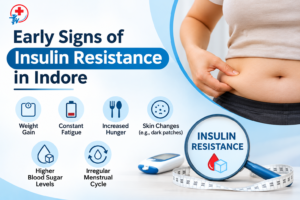
Recognising the early signs of insulin resistance in Indore helps people act before diabetes develops. Many signs are mild, so they are easy to blame on age, stress or a busy routine.
Watch for these common signs:
- Tiredness or sleepiness, especially after meals
- Extra fat around the belly and waist
- Strong cravings for sweets, bread or other refined foods
- Feeling hungry again soon after eating
- Dark, velvety patches on the neck, armpits or groin (called acanthosis nigricans)
- Small skin tags on the neck or underarms
- Trouble concentrating or “brain fog”
- Higher blood pressure or cholesterol readings
- Irregular periods in women with PCOS
No single sign confirms insulin resistance. However, if you notice several together, a blood test can give clear answers.
What Causes Insulin Resistance?
Insulin resistance has more than one cause. Genes and lifestyle usually work together.
The main causes and risk factors include:
- Excess body fat, especially around the belly. Belly fat releases substances that interfere with insulin.
- Low physical activity. Muscles use sugar for fuel, so inactivity makes insulin work less well.
- Diet high in refined carbohydrates and sugar. Sweet drinks, white flour and sugary snacks keep insulin levels high.
- Family history. If a parent or sibling has diabetes, your risk is higher.
- Poor sleep and chronic stress. Both can raise stress hormones that affect blood sugar.
- Risk rises as we get older, particularly after 40.
- Medical conditions and medicines. PCOS, fatty liver, sleep apnoea and long-term steroid use can all play a role.
People of South Asian origin tend to store more fat around the abdomen. As a result, they may develop insulin resistance even at a modest body weight. This makes regular check-ups especially valuable for families across Madhya Pradesh.
Insulin Resistance and Type 2 Diabetes in Indore
The link between insulin resistance and type 2 diabetes in Indore is the same as anywhere else. Insulin resistance usually comes first, and diabetes follows if nothing changes.
The usual progression looks like this:
- Cells respond less to insulin.
- The pancreas makes extra insulin to cope.
- Blood sugar stays normal, but insulin levels are high.
- The pancreas tires, and sugar levels begin to climb (prediabetes).
- Blood sugar crosses the diabetes range (type 2 diabetes).
The encouraging part is that steps 1 to 4 can often be slowed or even improved. If your fasting sugar or HbA1c is above normal, speak with a diabetes specialist in South Tukoganj, Indore without delay. Early advice can prevent complications affecting the eyes, kidneys, nerves and heart.
How Is Insulin Resistance Diagnosed?
There is no single simple test for insulin resistance. Doctors usually combine your story, a physical check and a few blood tests.
A doctor may look at:
- Your history: symptoms, family history, medicines, sleep and eating habits
- Physical measures: weight, waist size and blood pressure
- Fasting blood sugar: sugar level after an overnight fast
- HbA1c: your average blood sugar over the past two to three months
- Post-meal sugar or a glucose tolerance test: how your body handles sugar after eating
- Lipid profile: cholesterol and triglycerides
- Liver and thyroid tests: to look for related problems
- Fasting insulin: only in selected cases, as it is not needed for everyone
Together, these results show how your body is coping and which steps matter most for you.
Insulin Resistance Treatment in Indore: What Your Doctor May Recommend
Insulin Resistance Treatment in Indore usually begins with lifestyle changes rather than medicines. The plan depends on your age, weight, reports and other health conditions. No single approach suits everyone.
A typical plan includes:
- Healthy eating. Choose whole, fibre-rich foods and cut back on sugar and refined flour.
- Regular activity. Aim for at least 150 minutes of brisk exercise each week.
- Weight reduction. Even a 5% to 10% drop in body weight can improve how your body uses insulin.
- Better sleep and stress control. Seven to eight hours of sleep supports healthier blood sugar.
- Treating related problems. High blood pressure, cholesterol and thyroid issues need attention too.
- Medicines when needed. Some patients need tablets such as metformin to improve blood sugar control. Your doctor decides this after reviewing your reports.
- Regular follow-up. Repeat tests show whether the plan is working.
Never start or stop a medicine on your own. Always follow your doctor’s advice.
Insulin Resistance Diet Plan in Indore: What to Eat and Avoid
A practical insulin resistance diet plan in Indore can be built around familiar local foods. From Indore everyday meals of dal, roti, sabzi and curd can be adjusted rather than replaced.
Foods to Eat More Often
- Whole grains such as jowar, bajra, ragi, whole wheat and oats
- Dals, chana, rajma, moong and sprouts
- Green leafy vegetables, lauki, tori, cauliflower and cucumber
- Curd and buttermilk (unsweetened)
- Nuts and seeds in small portions
- Eggs, fish and lean protein if you eat non-vegetarian food
- Fruits such as guava, apple and papaya in sensible portions
Foods to Limit
- Sugary drinks, packaged juices and sweets
- Maida products, white bread and bakery items
- Deep-fried snacks and heavy street food
- Large portions of white rice
Indore is famous for its sev, namkeen and sweets. You do not have to give them up forever, but they should remain occasional treats.
A Simple One-Day Meal Idea
| Meal | Example |
| Breakfast | Moong dal or besan chilla with vegetables and curd |
| Mid-morning | One guava or a small handful of nuts |
| Lunch | One or two jowar or whole-wheat rotis, dal, vegetables, salad |
| Evening | Roasted chana or unsweetened buttermilk |
| Dinner | Vegetable khichdi, or grilled paneer or fish with sabzi |
A good insulin resistance diet plan in Indore should also follow a few easy habits:
- Fill half your plate with vegetables, a quarter with protein and a quarter with whole grains.
- Eat vegetables and protein before the carbohydrates.
- Avoid skipping meals, as this often leads to overeating later.
- Walk for 10 to 15 minutes after meals.
Every body is different, so ask your physician to personalise your insulin resistance diet plan in Indore, especially if you already take diabetes medicines.
Exercise and Daily Habits That Help
Movement is one of the most effective ways to improve insulin response. Your muscles use sugar more efficiently after exercise, and this effect lasts for hours.
Try these steps:
- Walk briskly for 30 minutes on most days.
- Add strength exercises, such as squats or resistance bands, two days a week.
- Break up long sitting hours with a short walk every hour.
- Sleep at fixed times and keep your room dark and quiet.
- Manage stress with yoga, breathing exercises or hobbies.
- Avoid smoking and limit alcohol.
Small, steady changes work better than extreme plans that you cannot continue.
Insulin Resistance Management in Indore: Building Long-Term Habits
Effective insulin resistance management in Indore is a long-term effort, not a quick fix. Blood sugar, weight and blood pressure all need regular attention, even after reports improve.
These habits help you stay on track:
- Set small, realistic goals, such as losing one kilogram a month.
- Track your weight and waist size every two to four weeks.
- Check your blood sugar as your doctor advises.
- Repeat key blood tests every three to six months.
- Take medicines at the right time, if prescribed.
- Involve your family, since shared meals shape everyone’s health.
Can Insulin Resistance Be Reversed?
In many people, insulin resistance improves significantly with weight loss, exercise and a healthier diet. Doctors often describe this as “reversing” it. However, the improvement lasts only while the healthy habits continue.
Why See a General Physician in South Tukoganj, Indore?
A general physician in South Tukoganj, Indore is often your first and most steady point of contact for health concerns. Insulin resistance rarely affects just one organ, so a physician who looks at the whole picture is valuable.
A general physician can:
- Assess your symptoms and overall health
- Order and explain blood tests
- Start a lifestyle and diet plan
- Manage related issues such as blood pressure, thyroid problems and cholesterol
- Prescribe medicines and monitor their effects
- Refer you to a specialist when needed
Dr KL Prajapati’s practice covers general medical care, diabetes management, hypertension, infections, lifestyle-related conditions and other chronic health concerns. This broad base helps him see how different conditions connect in one patient.
Choosing an Insulin Resistance Doctor in South Tukoganj, Indore
Picking the right doctor matters, because insulin resistance needs months of follow-up. When you search for an insulin resistance doctor in South Tukoganj, Indore, look beyond the sign board.
How to Choose a General Physician
Ask yourself these questions:
- Does the doctor listen to your full story without rushing?
- Are tests and treatments explained in simple words?
- Does the doctor look at your overall health, not just one number?
- Is follow-up care clearly planned?
- Is the clinic easy to reach and convenient for regular visits?
Why Professional Experience Matters
Experience helps a doctor recognise patterns that may be missed on a single report. Dr KL Prajapati has more than 40 years of clinical practice, which means decades of seeing how conditions such as diabetes and high blood pressure develop and respond to care. He believes patients should understand why an investigation or treatment is recommended. His consultation approach combines this experience with careful evaluation of each patient’s symptoms, history, medicines and lifestyle.
Insulin Resistance Treatment in Indore: What to Expect at Your First Visit
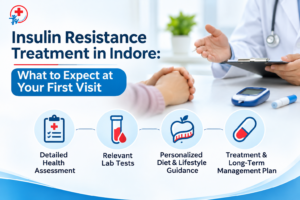
Knowing what happens during a consultation can ease worries. A first visit for Insulin Resistance Treatment in Indore usually follows these steps:
- A detailed conversation. You discuss your symptoms, family history, eating habits, sleep and current medicines.
- A physical check. The doctor measures blood pressure, weight and waist size.
- Blood tests. Tests are advised only where they are useful.
- A clear explanation. The doctor explains what your results mean in plain language.
- A personal plan. You receive guidance on diet, activity and, if needed, medicines.
- A follow-up schedule. You learn when to repeat tests and return for review.
Bring your old reports and a list of your current medicines. A consultation with an insulin resistance doctor in South Tukoganj, Indore becomes far more useful when past records are available. This also makes insulin resistance management in Indore more practical and personal.
Insulin Resistance Treatment in South Tukoganj, Indore: When to Seek Medical Help
Do not wait for diabetes to appear. Consider insulin resistance treatment in South Tukoganj, Indore if any of these apply to you:
- You have a family history of diabetes
- Your waist size is growing, or you struggle to lose weight
- Your reports show prediabetes or borderline sugar
- You have PCOS, fatty liver, high blood pressure or high cholesterol
- You notice the early signs of insulin resistance in Indore described earlier
When to Consult a Diabetes Specialist in South Tukoganj, Indore
You should consult a diabetes specialist in South Tukoganj, Indore if your sugar reports stay high, if you have excessive thirst or frequent urination, or if you have unexplained weight loss. Early review helps prevent complications. Seek urgent medical care if you have very high blood sugar with vomiting, confusion, severe weakness or trouble breathing.
Frequently Asked Questions on Insulin Resistance Treatment in Indore
1. What are the early signs of insulin resistance in Indore?
Common early signs include tiredness after meals, belly fat, sugar cravings, frequent hunger and dark patches on the neck or armpits. These signs are easy to ignore. If you notice several together, consult a general physician in South Tukoganj, Indore for simple blood tests.
2. What is the link between insulin resistance and type 2 diabetes in Indore?
Insulin resistance usually comes first. The pancreas works harder for years, then eventually cannot keep up, and blood sugar rises into the diabetes range. Early Insulin Resistance Treatment in Indore can slow or prevent this progress.
3. What is a good insulin resistance diet plan in Indore?
Build meals around vegetables, dal, sprouts, whole grains such as jowar and whole wheat, curd and lean protein. Limit sugar, maida and fried snacks. Healthy eating is the backbone of insulin resistance management in Indore.
4. Can Insulin Resistance Treatment in Indore work without medicines?
Yes, in many people lifestyle changes alone bring good results. These include a balanced diet, regular exercise, better sleep and weight loss. Some patients still need medicines, and a diabetes specialist in South Tukoganj, Indore can decide this after reviewing your reports.
5. How do I find an insulin resistance doctor in South Tukoganj, Indore?
Look for an experienced physician who listens carefully, explains clearly and plans regular follow-up. Dr KL Prajapati, a Senior Consultant Physician with more than 40 years of experience, practises as a general physician in South Tukoganj, Indore, at Trade House, MG 4.
6. How long does insulin resistance treatment in South Tukoganj, Indore take to show results?
Some people notice better energy and fewer cravings within a few weeks. Blood test changes are usually reviewed after about three months. Because Insulin Resistance Treatment in Indore is long-term, steady habits matter more than quick results.
7. When should I consult a diabetes specialist in South Tukoganj, Indore?
Consult one if your sugar reports are borderline or high, if diabetes runs in your family, or if you notice the early signs of insulin resistance in Indore. Seeing a doctor early gives you more options and better control.
8. What does a doctor do in insulin resistance management in Indore?
A doctor reviews your history, orders relevant tests, plans your diet and activity, treats related conditions and schedules follow-ups. This step-by-step approach supports insulin resistance treatment in South Tukoganj, Indore that is practical for daily life.
9. Which tests guide Insulin Resistance Treatment in Indore?
Doctors commonly use fasting blood sugar, HbA1c, a lipid profile, and liver and thyroid tests. Fasting insulin is checked only in selected cases. These results help judge the risk of insulin resistance and type 2 diabetes in Indore patients.
10. Does a general physician in South Tukoganj, Indore treat insulin resistance?
Yes. A general physician can evaluate your symptoms, order tests, begin a lifestyle plan, prescribe medicines and refer you if needed. Choosing the right insulin resistance doctor in South Tukoganj, Indore means finding someone who explains your care clearly.
Conclusion: Start Your Insulin Resistance Treatment in Indore
Insulin resistance is common, but it is also manageable. With the right diet, regular exercise, good sleep and timely medical advice, many people improve their blood sugar and protect their long-term health. Early Insulin Resistance Treatment in Indore can reduce the risk of complications and help you stay active for years to come.
If you are worried about insulin resistance and type 2 diabetes in Indore, or want a personalised plan for insulin resistance treatment in South Tukoganj, Indore, a consultation with Dr KL Prajapati is a sensible next step. His 40+ years of experience and patient-focused approach aim to make your care clear and practical.